
Have you ever left a class feeling like you trained hard, but with no idea what you actually improved that day? It happens more often than you'd think. Many people spend years on the mat training hard, suffering, getting swept over and over, without ever organizing their own training. In this article, I'll talk a bit about how to structure your progress in Jiu-Jitsu in a smarter way, without becoming obsessed with spreadsheets, but also without training on feel forever.
Why just "training a lot" isn't enough
Training often is important, nobody disputes that. However, frequency without direction is like rowing hard without knowing which way the boat is going.
I've seen plenty of dedicated students, the kind who never miss a class, stuck at the same belt for years because they always trained the same way: show up, do the techniques the instructor showed, roll, go home. Without asking why things work, without keeping track of what worked and what didn't.
It's not a rule, but in my experience, the people who improve fastest aren't necessarily the ones who train the most hours. They're the ones who put their focus where they need it most.
Defining your training focus
Before you step on the mat, it's worth having a clear idea of what you want to work on that day or that week. It sounds silly, but it makes a huge difference.
For example: if you know your guard passing is weak, pick two or three training partners who play open guard and ask them not to make it easy for you. If your problem is escaping side control, look for exactly the heaviest partners in the gym, suffer there and learn by doing.
Check out the article How to escape side control to better understand the principles of this position, one of the ones that most holds back beginners' progress.
Choosing a focus doesn't mean you'll ignore the rest of the class. It means that when the opportunity shows up during a roll, you'll make it your priority.
Organizing your training week
This brings up a question I get a lot: how many times a week do I need to train to really improve?
There's no magic number that works for everyone. It depends on your age, your recovery, your work schedule and even old injuries. But in general, I like to think of the week in blocks:
- Technique days, focused on repeating movements, without much intensity
- Sparring days, when you roll and test what you've learned against your training partners' resistance
- An active rest or mobility day, so fatigue doesn't build up
Keep in mind that training hard every day of the week, with no lighter days, is a recipe for injury and a performance plateau. That doesn't mean you have to go soft, but your body is also part of the technical equation. Without a healthy body, no Jiu-Jitsu holds up in the long run.
The role of repetition in your progress
Repeating the same technique over and over is boring for a lot of people, I know. But that's where the movement gets into your body in a way that rolling alone doesn't deliver.
During a roll you're under pressure, trying to survive, so your brain falls back on what's already automatic. It's in technical training, repeated without resistance or with controlled resistance, that you build that automatic response in your body.
If your instructor and gym allow it, or if you have a few mat tiles to train somewhere else, invite a training partner and drill the situations you struggle with most, many times over. You don't need to, and shouldn't, do everything on the same day. Choose just two or three techniques and repeat them many times.
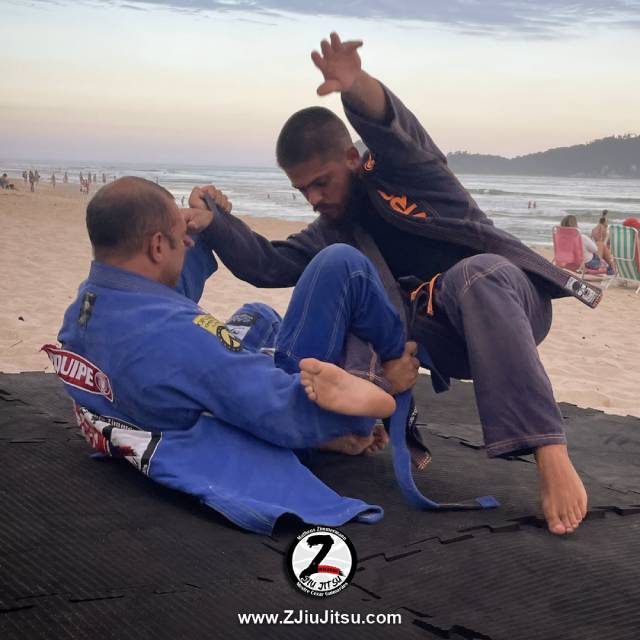
For example: if you're studying a specific sweep from a guard, repeat it thirty or forty times with a cooperative partner before trying it in a roll. Only then does your body start to recognize the pattern without you having to consciously think about every detail.
On top of that, it's during repetition that you adjust and notice the important details that make your movement as good as it can be.
Writing down what you learn
This is a simple tip, but few people apply it: keep a notebook, or any app on your phone, to write down what you worked on after each class, or at least what makes sense for your game.
It doesn't need to be anything elaborate. A few lines already help:
- Which position or technique did I work on today?
- What worked against a particular partner?
- What surprised me or got me stuck?
- What do I want to test in the next class?
Over time, this log becomes a personal map of your progress. You start to see patterns: "oh, I always get stuck when the guy goes to side control on my right", for example. And then you know exactly what to study.
Respecting your stage and your belt
This isn't a fixed rule, but each belt tends to call for a different kind of focus. White belts usually need a base, posture and survival. Blue belts start building their own game, testing positions and combinations. From purple belt on, the demand for detail and the right timing keeps growing.
That doesn't mean you have to follow this playbook to the letter. Some white belts arrive already thinking about a complex guard game, and some black belts are still refining basic fundamentals after decades. But knowing where you are helps you not to demand of yourself things that aren't your priority yet.
Training for competition, or not
If your goal is to compete, your training structure changes a lot, especially close to a tournament. That's where details like weight, scoring and match time come in, which follow the official rules of each event, usually the IBJJF rules.
It's worth studying the rulebook carefully, because some people train hard their whole lives and lose silly points in tournaments for not understanding the rules. Knowing what scores and what doesn't can completely change your training strategy.
If your focus is just personal growth and health, with no competition in sight, that's fine too! What matters is that the structure of your training matches your goal, without comparing your journey to that of someone looking for something else.
Conclusion
Training Jiu-Jitsu in a structured way doesn't mean turning the mat into a spreadsheet. It means bringing intention to what you already love doing. Every practitioner has a different body, routine and goal, so there's no single formula that works the same for everyone.
My advice to you is: define a focus, respect your rest days, don't abandon technical training, write down what you learn and be patient with your own belt. This simple combination already puts you way ahead of those who just train on autopilot.
I hope I've helped you think differently about your training routine! If this article made sense to you, share it with that training partner who also needs to read it. And take the chance to follow me on social media, and if you have any questions, just leave a comment there.
Good training! OSSS

Jiu-Jitsu video lessons, articles and stories with Matheus Zimmermann
The teacher → Private class or seminar →
